Monday, October 3, 2022

Open Access Journal: Abgadiyat: Journal of Ancient, Modern and Digital Scripts and Inscriptions

ISSN: 2213-8609
Print Only ISSN: 1687-8280 

Cover Abgadiyat

Abgadiyat is a scientific peer-reviewed journal co-published by Brill and the Writing and Scripts Center affiliated to Bibliotheca Alexandrina. Its Arabic name means “alphabets".

Abgadiyat’s scope is the study, documentation, conservation, and interpretation of writing, calligraphy, paleography, epigraphy, and inscriptions throughout the world. The journal publishes new academic research in these areas to help better understand the history of all types of ancient writing and how they developed into current writing systems. Abgadiyat promotes the study of inscriptions and the history of writing universally and seeks to raise awareness and further knowledge about the relationships between ancient scripts, paleography, calligraphy, and epigraphy.

Mot recent online issue:


See AWOL's full List of Open Access Journals in Ancient Studies


Sunday, October 2, 2022

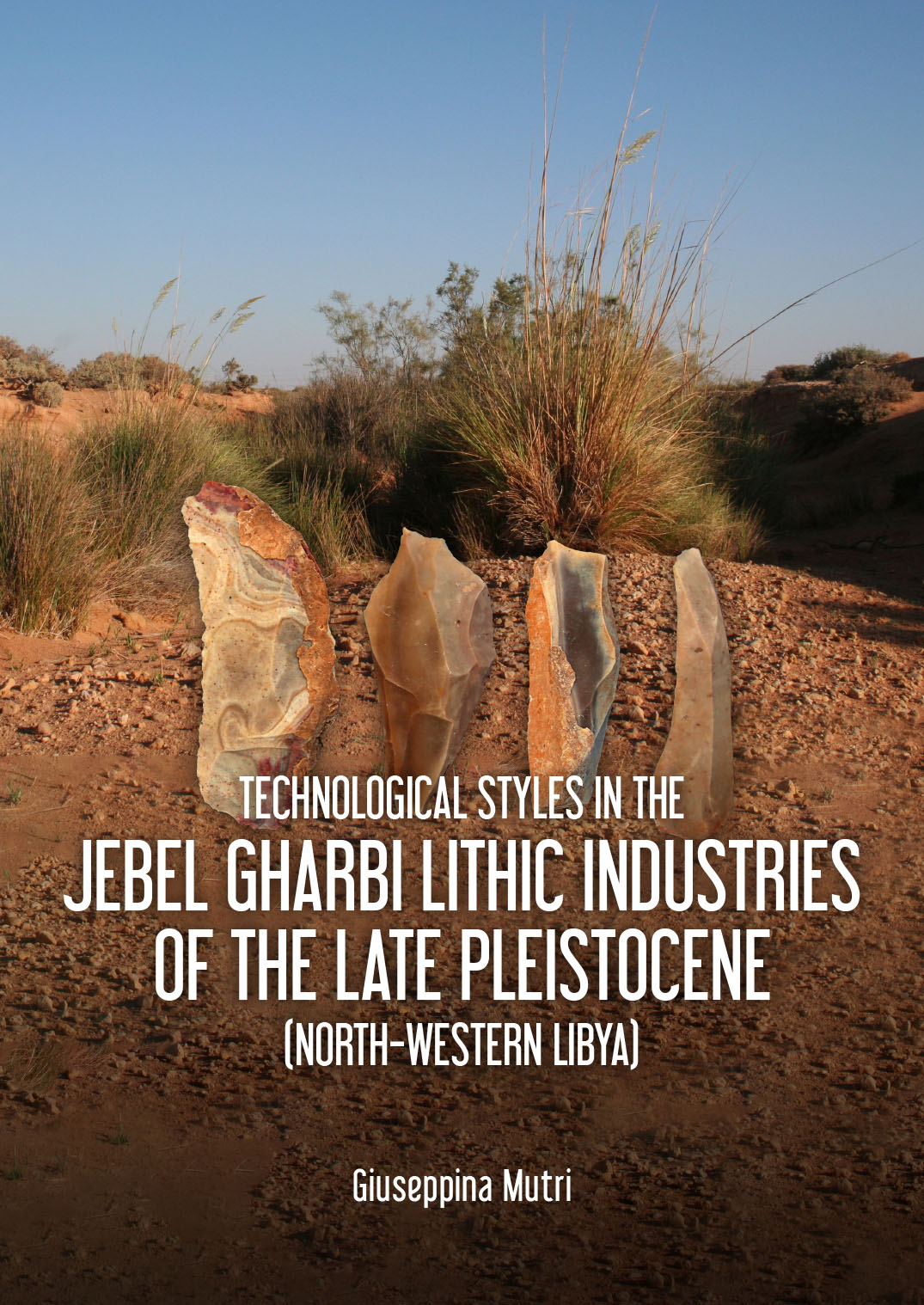
Technological Styles in the Jebel Gharbi Lithic Industries of the Late Pleistocene (North-Western Libya)

Giuseppina Mutri

The study of the human societies of the Final Pleistocene of North Africa requires an in-depth analysis of the techno-typological characteristics of the microlithic industries that were widespread in the whole Mediterranean area during the period between 24000 and 10000 years ago.

Most of the research projects in Maghreb and Libya were carried out decades ago. At the time sediments were rarely sieved and the small lithic tools, so characteristic of this period, were often lost. Also, little attention was paid to the raw material sourcing, which is an exceptional tool for understanding technology, human behavior and land management. It is thus of great importance to focus on new research, that has the potential to delineate a more detailed picture of the North-African Later Stone Age.

Based on more recent research in the Jebel Gharbi (Libya), this book offers a high-resolution description and documentation of the LSA lithic complexes of North-Western Libya, applying an approach that integrates up-to-date techno-typological studies with geochemistry and functional analysis. This research aims to define the characteristics of the human occupation of the Jebel Gharbi during the Late Pleistocene, with specific reference to the period from the Last Glacial Maximum to the Holocene transition, delineating a picture of the human occupation of the area through about ten millennia. This volume represents an exhaustive overview on the Prehistory of Northern Libya in areas that aren’t, nowadays, accessible to researchers.

Introduction

Chapter 1: Hunter-Gatherer societies in the north african context: History of studies, definitions, chronology.
1.1 research objectives
1.2 microlithism and backed industries in the late North African Pleistocene. Chronology, characteristics and diffusion.
1.3 Pleistocene microlithic industries: human group circulation, methods, stratigraphical issues and hypothesis about an origin.
1.4 Pleistocene microlithic industries and palaeoclimatic aspects (Last Glacial Maximum)
1.5 State of the art of the research on Later Stone Age North-African contexts

Chapter 2 : Jebel Gharbi, environment and cultures
2.1 Introduction
2.2 Research in Jebel Gharbi
2.3 Geomorphological aspects and chrono-stratigraphical sequences
2.4 Palaeoclimate and palaeoenvironment during the Late Pleistocene
2.5 LSA sites in Jebel Gharbi. A description of the analysed sample.

Chapter 3: From the artifact to society: lithic industries, study methods used. Archaeometry, techno-typological analysis, functional analysis and experimentation
3.1 Methodological aspects
3.2 Raw material analysis: knappable stone characteristics. Raw material procurement, technological aspects of lithic complexes and human group mobility. Raw material determination techniques. Petrographic analysis. SEM observation. Geochemical analysis.
3.3 Study of lithic complexes. Technological analysis. Typological analysis. Techno-functional analysis.

Chapter 4: Raw material: distribution, analysis and characteristics of flint outcrops in Jebel Gharbi.
4.1 Flint outcrops and formations in Jebel Gharbi
4.2 Sampling and definition of a descriptive record as an instrument of data systemization
4.3 Analysis of the characterization of flints from flint outcrops and of the techno-complexes that are the object of study
4.4 Sites SJ-06-85, SJ-06-84 e SG-07-94: three flint first-extraction workshops. Technological observations and experimental comparisons.
4.5 Quartzite and the origin of other raw materials in LSA lithic complexes in Jebel Gharbi

Chapter 5: The study sample in the Shakshuk and Wadi Ghan areas.
5.1 Site SJ-00-55 East. Raw material analysis, typological analysis, technological analysis.
5.2 Site SJ-00-56. Raw material analysis, typological analysis, technological analysis
5.3 Site SJ-02-63. Raw material analysis, typological analysis, technological analysis
5.4 Site SJ-00-41. Raw material analysis, typological analysis, technological analysis

Chapter 6. From the industry to the site. Techno-functional experimental study of lithic artefacts.
6.1 Methodological motivations of a light-power approach in the functional study of lithic techno-complexes and in the analysis of the site function
6.2 Functional analysis of macro-traces and impact fractures of some of the complexes studied
6.3 Experimental assessment of some techno-functional aspects of the lithic complexes studied. Realisation of the Ouchtata retouch. Productive potential of cores, projectile hypothesis
6.4 Functional interpreting of the sites studied in the light of the technological, typological and functional data.

Conclusion: The Jebel Gharbi sequence in the framework of hunter-gatherer societies in North Western Africa.
7.1 Settlement choices and raw materials. Hypotheses on the behavioural aspects of LSA groups in Jebel Gharbi

Final Remarks
Bibliography
Tables

 Paperback ISBN: 9789464280272 | Hardback ISBN: 9789464280289 | Imprint: Sidestone Press Dissertations | Format: 182x257mm | 198 pp. | Language: English | 90 illus. (bw) | 5 illus. (fc) | Keywords: archaeology; lithic technology; late pleistocene; palaeolithic; raw materials; Libya; North-Africa; Jebel Gharbi; microliths | download cover

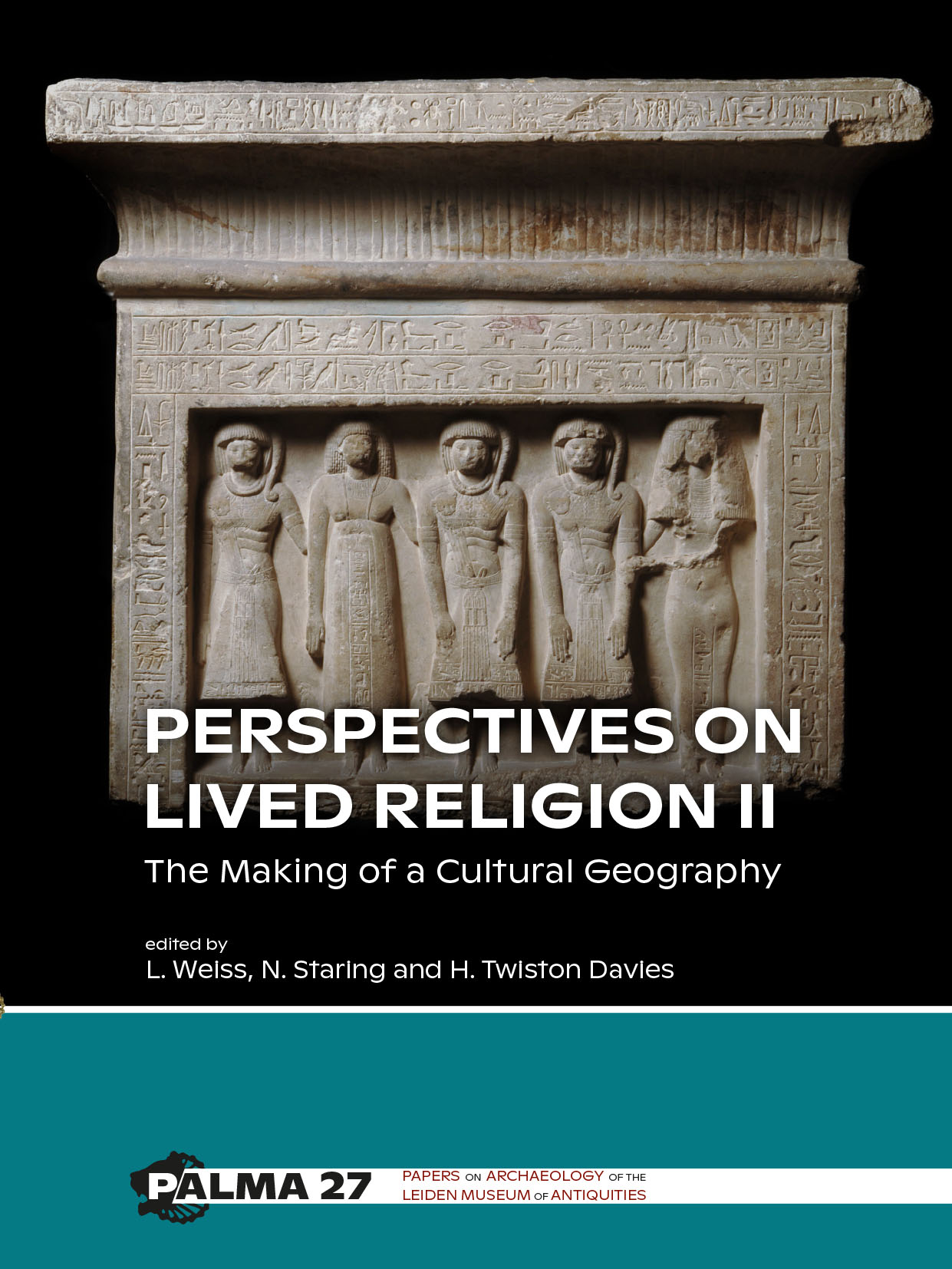
Perspectives on Lived Religion II: The Making of a Cultural Geography

Edited by Lara Weiss, Nico Staring, Huw Twiston Davies

Ancient Egyptian elites invested immense cultural and economic efforts in preparing for their afterlives. However, the diversity of choices open to them is often overlooked. These choices included tomb size, tomb location, and architectural design, as well as tomb decoration, and the selection of certain grave gifts. Their choices depended on financial means, but also on contemporary fashion, among other factors. Ancient sites were visited by the living to commemorate and rejuvenate human ancestors and the gods, as individual acts or as part of large-scale processions. They also visited cemeteries because of new building activities, or to visit already-ancient monuments. The daily interactions of the living with their ancestors and gods are traceable in the evidence of lived religious practices, the transmission of texts and images, and the processes which shaped the landscape. Older monuments and stories remained accessible, and the ongoing use of the site created a palimpsest landscape, showing the results of millennia of human activity. These results of past activities could hold special significance for later generations, but new meanings often supplanted older interpretations.

Building on the success of Perspectives on Lived Religion, Perspective on Lived Religion II presents the results of a conference held in Cairo, September 29th – October 1st 2019, and kindly funded by the Dutch Research Council (NWO) Vidi Talent Scheme, as part of the Leiden University research project “The Walking Dead at Saqqara: The Making of a Cultural Geography”. The papers presented here are written by both well-established and more recent Egyptologists, and examine examples of human agency at various sites in ancient Egypt, such as Saqqara, Thebes, Abydos, and Pi-Ramesse. These case studies examine which traditions were followed, disputed, and negotiated by whom and where in ancient Egypt, as well as discussing the modern perception of some of these traditions.

PART I. Religious Practices

Taking the dead to the cemetery, communicating with them, and managing their presence
John Baines (University of Oxford)

‘Socializing’ the sacred space. An analysis of graffiti and appeals to the living as social acts in Karnak
Chiara Salvador (University of Oxford)

Figurations in the study of Egyptian religion. The case of Amarna
Janne Arp (Georg-August Universität Göttingen)

PART II. Transmission

Remembering Forward. On the Transmission of pictorial representations in non–royal tomb decoration up to the New Kingdom
Gabriele Pieke (Reiss–Engelhorn–Museen, Mannheim)

Establishing communication channels. Remarks on the transmission of the Ritual of Opening the Mouth as (not only) a funerary text
Joachim Quack (University of Heidelberg)

The Flying Dead
Faiza Haikal

PART III. LANDSCAPE

Pyramid life in secondary epigraphy. Cultural biography and regimes of historicity
Hana Navratilova (University of Reading)

The Landscape(s) of Pi-Ramesse. Living and Dying in the Capital of Ramesside Egypt
Henning Franzmeier (Roemer- und Pelizaeus-Museum Hildesheim)

Between Town and Temple. Exploring the Influences of Royal, Religious and Social Institutions on Funerary Landscape at South Abydos during the New Kingdom
Kevin Cahail (University of Pennsylvania Museum of Archaeology and Anthropology)

Paperback ISBN: 9789464261196 | Hardback ISBN: 9789464261202 | Imprint: Sidestone Press | Format: 210x280mm | 164 pp. | Papers on Archaeology of the Leiden Museum of Antiquities 27 | Series: PALMA | Language: English | 28 illus. (bw) | 31 illus. (fc) | Keywords: religion; transmission; landscape; archaeology; ancient Egypt; art history | download cover


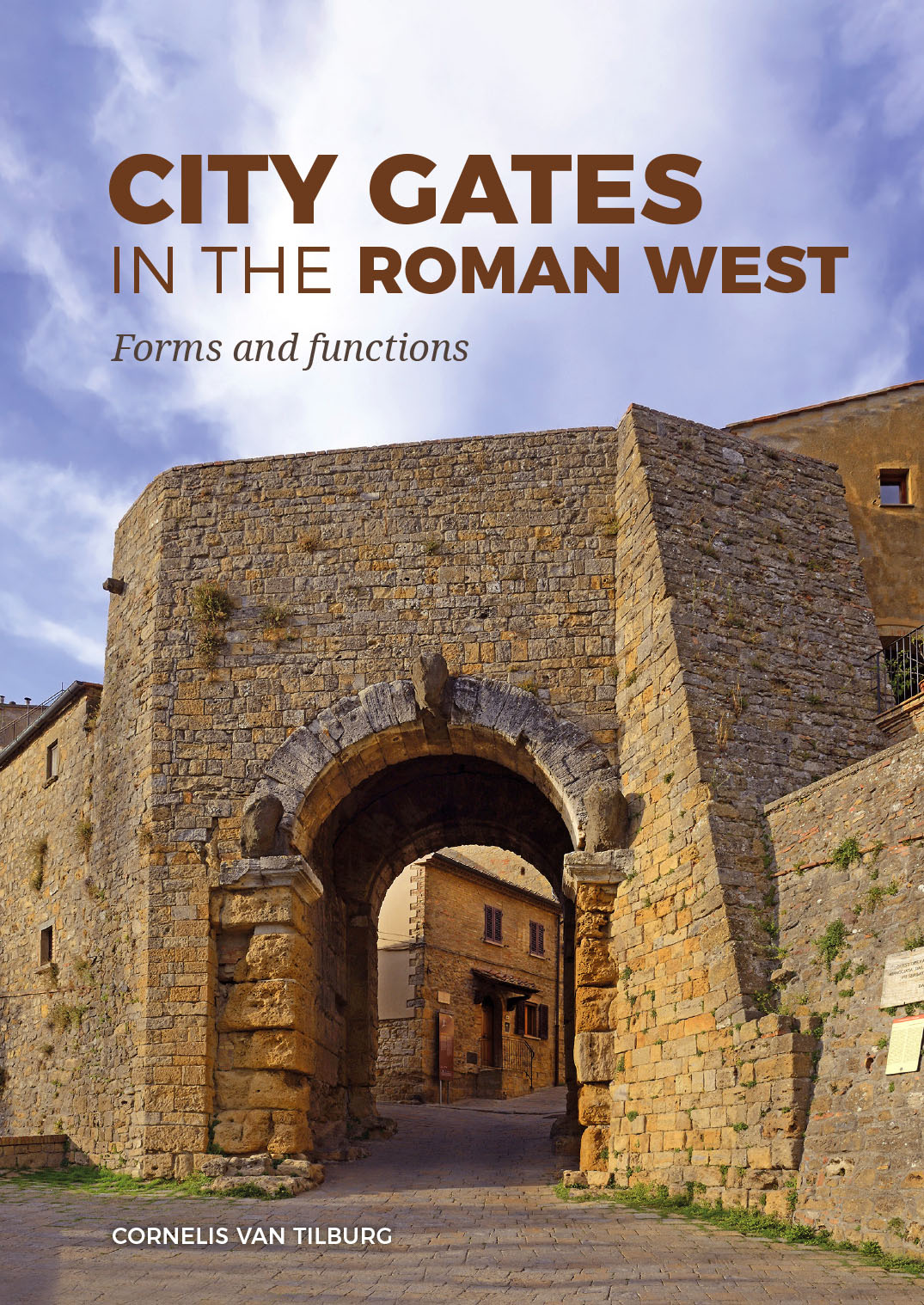
City Gates in the Roman West: Forms and functions

Cornelis van Tilburg

This book discusses various aspects of city gates in the Western Roman Empire: Italy, Spain, Gaul, Germany and Britain. In these countries many Roman city gates are to be found, sometimes still in a good condition, like the Porta Nigra in Trier and the Porta Appia in Rome.

Similarly to medieval or early-modern city gates, Roman city gates did not all have the same design but show an evolution over time and depending on the circumstances: sometimes they appear as simple, narrow passages (which were easy to defend), sometimes as impressively monumental complexes (which were comfortable for increased traffic and were comparable in their function to triumphal arches: both served as symbols of urbanitas, expressing Roman power).

But city gates had more functions than being a part of the city defence system and the road infrastructure. In many cases, they played a role in the supply of drinkingwater and the removal of waste water. Furthermore they were connected to social and magico-religious aspects of city life.

This book brings together all available material concerning those city gates in the Roman West that are preserved in a good enough condition to be described and discussed. It focusses on the forms and functions of the gates. In addition, it comprises textual sources (both literary and epigraphic material) containing information on the uses of city gates.

For more information about Roman City Gates, also see www.romancitygates.com

Acknowledgements
Preface
Introduction

I. Predecessors

1. City gates in the Middle East, Greece and Gaul

II. Forms

2. The first city gates: Wide enough for traffic
3. From single-portalled to three-portalled gates
4. The Empire: Imposing city gate complexes
5. Late Antiquity: Back to city defence
6. Five city gates in more detail
7. Summary

III. Functions

8. City defence
9. Traffic
10. Water management
11. Status and decoration
12. Watching and toll
13. Meeting points and economy
14. Religion and magic
15. Summary

Summary and conclusion

Appendix 1. Dating city gates
Appendix 2. Plans of city gate types
Appendix 3. Dimensions of significant city gates
Bibliography
Indexes

Paperback ISBN: 9789464261073 | Hardback ISBN: 9789464261080 | Imprint: Sidestone Press | Format: 182x257mm | 273 pp. | Language: English | 48 illus. (bw) | 94 illus. (fc) | Keywords: city gates; archaeology; art history; Roman history; urban history; history; military history; city planning; Antiquity; Romans; defensive structures | download cover


Saturday, October 1, 2022

Elementary New Testament Greek

 Read more about Elementary New Testament Greek

Copyright Year: 2014

Contributor: Dongell

Publisher: First Fruits Press

License: CC BY-NC

The need for this particular grammar arises from the peculiar shape of the MDiv curriculum at Asbury Theological Seminary. Several years ago the faculty adopted a curriculum that required one semester of Greek and one semester of Hebrew, each as preparatory for a basic exegesis course in each discipline.

(1 review)

READ MORE


Studying the Bible: The Tanakh and Early Christian Writings

Read more about Studying the Bible: The Tanakh and Early Christian Writings

Copyright Year: 2019

Contributors: Eiselein, Goins, and Wood

Publisher: New Prairie Press

License: CC BY-NC

Studying the Bible: The Tanakh and Early Christian Writings is a university-level, textbook introduction to the study of the Bible, its literary forms, and historical and cultural contexts. This textbook is a companion to the Bible courses taught in the English Department at Kansas State University, in particular ENGL 470 The Bible, though it is available for use in other courses and contexts. This textbook examines the Hebrew Bible (also known as the Tanakh) and the early Christian writings of the New Testament. It is an introduction to the analysis of biblical texts, their histories, and their interpretations. The emphasis throughout this textbook is on the literary qualities of these biblical texts as well as their cultural and historical contexts.

(4 reviews)

READ MORE


Reading the Bible as Literature: A Journey

Contributor: Jody Ondich
Read more about Reading the Bible as Literature: A Journey

Copyright Year: 2022

Publisher: Minnesota State Colleges and Universities

License: CC BY-NC-SA

The Bible is one of the most published books in human history. It is also one of the most misquoted, misunderstood and misused books in human history. This happens because people are not always aware that the Bible is not a book, it is a collection of diverse writings. The Bible might even be called an anthology, and it will include everything from poetry to genealogy, pithy sayings to architectural mandates, mythology to letters. Knowing what one is reading helps one understand the ideas in the writings. We read letters in the context of who wrote them and who received them. We read sermons understanding the speaker's perspective may differ from the listener's perspective. So this text is an attempt to give historic, literary, geographical and cultural context to a complex and often poorly understood set of materials. This is very much an ebook, and needs to be used in that format. Pdfs and other printed versions will lose a great deal of the content.

No ratings

(0 reviews)

READ MORE