Welcome
to the Digital Toolbox for Iranian Studies and related fields, a weekly
updated research repository that currently lists 849 digital resources.
The
Hermes Media 3 Farsi typewriter, photograph from the private archive
and by the courtesy of type designer/typographer & researcher Amir Mesbahi.
The toolbox aims at collecting all available
digital resources that are relevant to Iranian Studies & related
fields of study. It may help you to find:
primary sources & academic literature
manuscripts & objects in digital archives & collections
historic maps, coinage, linguistic corpora
academic publications & institutions
podcasts, blogs & academic communities
and useful apps for your research
Last updated: 25 July 2024 (updates come every Thursday)
Le temple d’Hathor à Dendara, admirablement conservé, est probablement
la plus aboutie des réalisations architecturales de l’Égypte ptolémaïque
et romaine et la richesse des compositions théologiques qui ornent ses
murs est incomparable. Ses inscriptions hiéroglyphiques ont été éditées
sous l’égide de l’Institut français d’archéologie orientale, d’abord par
É. Chassinat puis par Fr. Daumas, et enfin par S. Cauville. Ce volume
présente les planches photographiques des parties du pronaos suivantes :
les plafonds, les portes latérales, les parois extérieures, le toit du
temple. Les isncriptions figurant dans ces différentes scènes
photographiées ont été traduites et commentés notamment dans Dendara XV.
IF1405 ISBN 9782724711424 2025
IFAO
Collection: Temples Dendara 15.1
Langue(s): français 1 vol. 406 p. gratuit - free of charge
Die Terrasse um das Theater des antiken Aigeira zählt zu den
interessantesten Bauensembles hellenistischer Zeit auf der Peloponnes.
Ihre Erforschung ist einer der Schwerpunkte der langjährigen Tätigkeit
des Österreichischen Archäologischen Instituts in Aigeira. Der von
Walter Gauß herausgegebene Sammelband präsentiert sowohl Erkenntnisse zu
den früheren Grabungen von Wilhelm Alzinger der 1970er und 1980er Jahre
als auch neue Ergebnisse aus den unter der Leitung des Herausgebers
zwischen 2011 und 2018 durchgeführten Forschungen. Die großzügige
Ausgestaltung des vorher kaum bebauten Areals in ein neues öffentliches
Zentrum mit Sakral- und Profanbauten begann um die Mitte des 3. Jh. v.
Chr. und steht am Beginn der Blütezeit Aigeiras. Diese ist eng mit der
Geschichte des Achaiischen Bundes verknüpft und dauerte bis in die
römische Kaiserzeit hinein an. Bis zum 1. Jh. v. Chr. wurden im
Theaterbereich das Theater, ein dorischer Ringhallentempel, ein großes
Peristylgebäude und mehrere kleine tempelartige Bauten, sogenannte
Naiskoi, errichtet, die vermutlich als Schatzhäuser, Bankett- oder
Kultgebäude genutzt wurden. Während Aigeira bis in die beginnende
Spätantike ein städtisches Zentrum blieb, hatte der Theaterbereich zu
dieser Zeit seine Funktion als öffentliches Zentrum verloren und diente
im 4./5. Jh. n. Chr. als Werkstattareal. In vierzehn Beiträgen werden
Aspekte der Entwicklung und Ausstattung einzelner Gebäude sowie
ausgewählter Gruppen von Kleinfunden diskutiert, aber auch Fragen zur
Funktion des Areals und seiner Bedeutung für das politische und
religiöse Geschehen in Aigeira.
Dieser
Band präsentiert einen interdisziplinären Diskurs über die jüngsten
archäologischen Untersuchungen an den antiken Stätten von Sikyon,
Aigeira und Lousoi. Die nordpeloponnesischen Poleis fungierten als
Zentralorte dreier Mikroregionen, die seit der geometrischen und
archaischen Zeit an ähnlichen Austauschnetzwerken partizipierten, wenn
auch mit ganz unterschiedlichen Rollen. Angesichts ihrer geographischen
Lage an der Südküste des Korinthischen Golfs einerseits und im
gebirgigen Hinterland andererseits bieten sie Einblick in drei
Mikrokosmen mit sehr unterschiedlichen Umweltbedingungen,
sozio-politischen Strukturen und wirtschaftlichen Möglichkeiten. Wie die
neuen Studien zeigen, waren die Mikroregionen und ihre Hauptsiedlungen
trotz aller Unterschiede während der gesamten Antike durch starke
kulturelle, wirtschaftliche und zeitweise auch politische Bindungen
miteinander verbunden.
Die neuen Primärquellen, die durch die verschiedenen Beiträge
erschlossen werden, tragen dazu bei, jeden Ort in seinem einzigartigen
lokalen Kontext von der geometrischen bis zur römischen Periode zu
charakterisieren. Das breite Spektrum der behandelten Themen umfasst die
räumliche Konfiguration von Siedlungen, die verschiedenen Faktoren des
städtischen Wachstums und Niedergangs, die Veränderungen von Konsum- und
Produktionsmustern sowie von religiösen Praktiken und die Herausbildung
von Gruppenidentitäten auf verschiedenen kulturellen Ebenen.
During
the Second Intermediate Period (ca. 1775-1550 BC) period, Egypt was
politically and culturally divided into regions, and it was
characterized by the presence of groups from modern-day Syria-Palestine
and Sudan. To better understand the relationships between the Egyptian
sites during this period, I have analysed the objects (beads, stone
vessels, scarabs and seals, metal weapons, and two particular types of
pottery) that the relevant sites have in common, through network
analysis. This quantitative and statistical methodology, which makes use
of digital tools, is ideal to examine the relations, as well as the
flow and circulation of objects, resources, information, or knowledge
between different entities, based on what these entities have in common
(or not). During the Second Intermediate Period, contacts can still be
detected between different areas, even though they were weaker and
happened mostly through desert routes. Two phenomena can be detected:
the growing importance of Tell el-Dab’a/Avaris in circulation of objects
and resources, and the role played by the communities of Pan-grave
culture, known only form archaeological remains and featuring
connections with Nubia (modern-day Sudan).
Supervisor
Kaper, O.E.
Co-supervisor
Müller, M.
Committee
Waerzeggers, C.; Akkermans, P.M.M.G.; Bader, B.
Qualification
Doctor (dr.)
Awarding Institution
Leiden University Institute for Area Studies (LIAS),
Faculty of Humanities, Leiden University
Dr.
Taufiq Canaan gathered many amulets from 1905 to 1947 in rural areas
and towns of Palestine. Among the amulets he collected, the largest
group is at Birzeit University and it is known as the Tawfik Canaan
Collection of Palestinian Amulets. It contains a wide variety of
objects, a unique group of uninscribed amulets, and extensive
documentation of all the items. In my thesis I conclude that the amulets
in this Collection do not only deserve our attention as museum objects,
but as living objects that have a life and have gone through different
phases. These phases become clear by analysing Canaan’s collecting
process throughout the years in relation to his multifaceted life as a
modern physician, anthropologist, folklorist, collector, social figure,
and political activist. In every chapter I explore and contextualise
each phase and highlight the amulets’ functions in the networks in which
they circulated; from healing and protective remedies used by Canaan's
patients in the first half of the 20th century, to becoming tokens of a
Palestinian national identity when they were catalogued and exhibited in
1998. The importance of this research lies in the shift of focus from
the Collection as a unit to the objects's functions and circulation
disclosing the social, cultural and political conditions of the
manufacture, use, trade, ethnographic study, and collection of amulets.
Supervisor
Sijpesteijn, P.M.; Tamari, S.
Committee
Keurs, P. ter; Murre-van den Berg, H.L.; Sanchez-Summerer, K.M.J.; Cesari, C. de
Qualification
Doctor (dr.)
Awarding Institution
Leiden University Institute for Area Studies (LIAS),
Faculty of Humanities, Leiden University
Date
2021-12-01
Funding
Sponsorship
Mexican National Council for Science and Technology
The AWOL Index: The bibliographic data presented herein has been programmatically extracted from the content of AWOL - The Ancient World Online (ISSN 2156-2253) and formatted in accordance with a structured data model.
AWOL is a project of Charles E. Jones, Tombros Librarian for Classics and Humanities at the Pattee Library, Penn State University
AWOL began with a series of entries under the heading AWOL on the Ancient World Bloggers Group Blog. I moved it to its own space here beginning in 2009.
The primary focus of the project is notice and comment on open access material relating to the ancient world, but I will also include other kinds of networked information as it comes available.
The ancient world is conceived here as it is at the Institute for the Study of the Ancient World at New York University, my academic home at the time AWOL was launched. That is, from the Pillars of Hercules to the Pacific, from the beginnings of human habitation to the late antique / early Islamic period.
AWOL is the successor to Abzu, a guide to networked open access data relevant to the study and public presentation of the Ancient Near East and the Ancient Mediterranean world, founded at the Oriental Institute, University of Chicago in 1994. Together they represent the longest sustained effort to map the development of open digital scholarship in any discipline.
 vezvez-e kandū A Digital Toolbox for Iranian Studies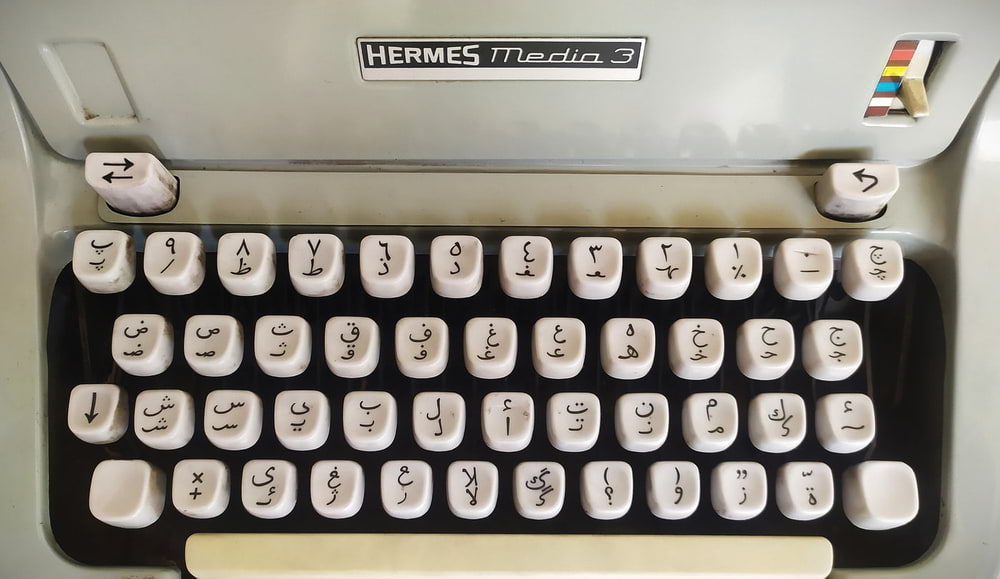







 Posts
Posts


 Stumble It!

