Thursday, June 30, 2011

Open Access Journal: Medieval Feminist Forum

Medieval Feminist Forum
ISSN: 1536-8742 (print)
ISSN: 2151-6073 (online)
Medieval Feminist Forum (MFF) (ISSN 1536-8742 (print), ISSN 2151-6073 (online)) is the journal of the Society for Medieval Feminist Scholarship (SMFS). SMFS promotes interdisciplinary scholarship on women and gender from Late Antiquity (ca. 500 CE) to ca. 1500 CE. MFF appears twice yearly publishing articles, book reviews, and bibliographies. Some issues are thematic. Submissions to MFF are blind peer reviewed.

MFF was originally published under the title Medieval Feminist Newsletter (ISSN 1054-1004 (print), ISSN 2154-4042 (online)). In 1999 (no. 28) the journal title changed to Medieval Feminist Forum.

Issues are available freely online beginning two years after publication. Access to full text of recently published issues is by subscription only. For more information on subscribing to MFF, please visit http://hosted.lib.uiowa.edu/smfs/mff/join.shtml.

Beginning with the Winter 2009 issue, vol. 45, no. 2, Medieval Feminist Forum is published in electronic format only.

MFF is indexed by MLA Bibliography (2005+), Feminist Periodicals (1996+), and Feminae

MFF is hosted by the University of Iowa Libraries' Institutional Repository (Iowa Research Online).


Wednesday, June 29, 2011

Ernst Herzfeld Papers

Announced today at the Smithsonian Collection Blog: New Freer|Sackler Archives Image Galleries

Ernst Herzfeld Papers
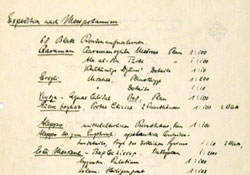
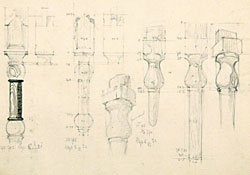
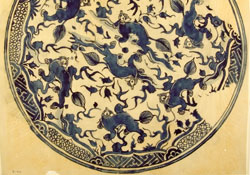
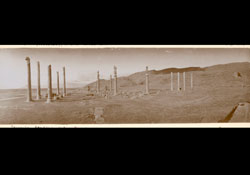
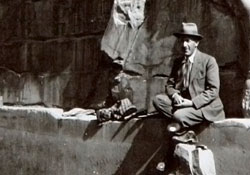
A foremost scholar in the field of Iranian studies, Ernst Herzfeld (1879–1948) explored all phases of Near Eastern culture from the prehistoric period to Islamic times. The collection documents Herzfeld's archaeological activities including Samarra, Persepolis, Pasargadae, Paikuli, and Aleppo and includes correspondence; field notebooks; drawings; sketchbooks; inventories of objects; squeezes of architectural inscriptions and details; and photographs.

Preservation, digitization, and cataloging has been made possible by the Leon Levy Foundation. The cataloging of this collection commenced in September 2009, and will be ongoing until Summer 2011. Please be advised that some of the Series and categories are not hot linked to images yet as we are in the process of making them available.

Cataloging and descriptions for the Ernst Herzfeld papers were created based on primary materials within the Ernst Herzfeld papers, notes and organization from Joseph Upton, and from secondary sources listed in the Ernst Herzfeld Resource Bibliography.

It is our hope that by providing the Ernst Herzfeld papers online we are contributing to the scholarship of, and interest in, the archaeological sites of the ancient Near East. We welcome additional insight and scholarship you may be able to add. If you hold, or know where related materials may be, please contact us so that we can maintain an up to date record of all Ernst Herzfeld resources. In the future, the Freer|Sackler hopes to expand upon this web resource to include all Ernst Herzfeld materials.

Permission to reproduce and publish an item from the Archives is coordinated through the Freer Gallery of Art and Arthur M. Sackler Gallery's Rights and Reproductions department. For inquiries on selecting images or appointments to research the collection, please contact the Archives

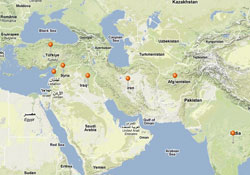
Go read our latest news on the collection available on our blog and view our video tutorial on how to search the Archives. Click here to view a list of the locations for which we have Herzfeld materials. 
See earlier postings in AWOL on Herzeld:

Herzfeld at Samarra


Ernst Herzfeld Papers


Berkeley Prosopography Services Wiki

Berkeley Prosopography Services Wiki Home
Berkeley Prosopography Services (BPS) is an open-source prosopographical toolkit that generates interactive visualizations of the biological and social connections that link documented individuals, providing a dynamic and heuristic tool for researching historical communities documented in legal and administrative archives.


We are currently exploring and developing a prototype application with a single target corpus, but will soon expand to support multiple corpora. The initial corpus is a set of Hellenistic Babylonian legal texts (cuneiform tablets).

Tuesday, June 28, 2011

New Ancient World Content in JSTOR

Multidisciplinary and Discipline-Specific Collections at JSTOR
The following journals have been added to the JSTOR archive. More detailed information about JSTOR titles and collections, along with delimited lists, can be accessed from JSTOR's Available Collections page
 
Annual Report of the Trustees of the Metropolitan Museum of Art (Arts & Sciences VIII)
Coverage: No. 1 (1871) – No. 138 (July 1, 2007/June 30, 2008)
Moving Wall: 3 years
Publisher: Metropolitan Museum of Art
ISSN: 0740-7661


And see also The Ancient World in JSTOR: AWOL's full list of journals in JSTOR with substantial representation of the Ancient World.

Bookmark and   Share so Your Real Friends Know that You Know

Enkomi Digitisation Project

The Digitisation of the Artefacts of the Enkomi tombs (British Excavations) in the Cyprus Museum
Dr. Despo Pilides, Curator of Αntiquities, Department of Antiquities, Cyprus

The Project
The idea for the proposal of this assignment was triggered by the corresponding project undertaken by the Greek and Roman Department of the British Museum, which consisted partly of the digitization of the material excavated by the British at Enkomi as part of the Turner Bequest excavations from 1894 to 1896. The Cyprus Museum objects from these excavations and the digitization of this material will provide a link and ultimately unite the two databases, thus reconstituting, to the extent possible, the contents of the tombs.
The proposal was submitted and approved by the Promotion Foundation for Research in 2008. Its duration of 24 months (from January 2009 to December 2010) involved archival research concerning the excavations of one hundred tombs of the Late Bronze Age, of considerable wealth, excavated in 1896 and published in 1900. Two thirds of the objects were transferred to the British Museum as per the terms of the Antiquities Law at the time which allowed the excavator, the owner of the land and the Government a share of one third each of the total number of objects found.  The excavators usually bought the land and were, therefore, granted two thirds of the finds. The Cyprus Museum share was kept in the old premises at Victoria Street. It was then transferred to the new Cyprus Museum, around 1909 and was given new accessory numbers.

The programme is a collaborative effort between the Department of Antiquities, the Open University of Cyprus and the British Museum. Its implementation will ensure the preservation of the collection, it will provide accessibility to objects belonging to the so-called “old collection” in the Cyprus Museum store rooms and consequently facilitate research. Furthermore, it will promote the use and application of statistical and analytical techniques for archaeological data and will give the opportunity to educational institutions to use it as a teaching aid.


Having in mind that Enkomi is located in the occupied part of Cyprus and that the material of the excavations from the site, initiated at the end of the 19th century, is dispersed in different museums of the world, the digitisation of its material is of primary importance. The project may act as a precedent in bringing together dispersed material from the same sites, located in different museums and obstructing a holistic view of those sites. It constitutes the first organised attempt to create a database of antiquities kept in the Cyprus Museum, and the first attempt to transmit data and information through the internet, and via a collaboration between major institutions.

Corpus Inscriptionum Latinarum Datenbank

Corpus Inscriptionum Latinarum Datenbank

...Das ›Corpus Inscriptionum Latinarum‹ erfaßt die lateinischen Inschriften aus dem gesamten Raum des ehemaligen Imperium Romanum in geographischer und systematischer Ordnung; es ist seit seiner Begründung durch Theodor Mommsen die maßgebliche Dokumentation des epigraphischen Erbes der römischen Antike.

Das Berliner Team, das die Fortsetzung dieses Werkes betreut, koordiniert die notwendige internationale Zusammenarbeit mit den Fachgelehrten und bereitet fremde und eigene Manuskripte zur Publikation vor: Neufunde und Korrekturen bereits veröffentlichter Inschriften werden in Zweitauflagen und Supplementen ediert und so das Corpus aktualisiert und kontinuierlich erweitert.

Um ihre eingangs beschriebene Aufgabe zu erfüllen, kann sich die Berliner Zentrale freilich nicht auf die wissenschaftliche Redaktion beschränken, wiewohl hierin der Schwerpunkt ihrer Arbeit liegt. Sie muß sich auch um die laufende Auswertung der Literatur zur lateinischen Epigraphik und um die Herstellung von bibliographischen Nachträgen zum Corpus bemühen. Die Bibliographie zur lateinischen Epigraphik, die seit 1950, neuerdings als Filemaker-Datenbank, geführt wird und mehr als 30.000 Titel umfaßt, eine spezielle Kartei mit Nachweisen neuerer Literatur zu den einzelnen im CIL selbst und in anderen Sammlungen veröffentlichten Inschriften sowie Manuskripte und Exzerpte früher edierter Inschriften bilden zusammen mit einer stattlichen Sammlung von Abklatschen oft benutzte Auskunftsmittel. Sie stellen zugleich einen unschätzbaren Fundus dar, vom welchem ausgehend die Vorbereitung von Corpora in eigener Verantwortung in Angriff genommen werden kann...
And see also Corpus Inscriptionum Latinarum II

Corpus Inscriptionum Latinarum II

Corpus Inscriptionum Latinarum II
LOGO DEL CENTRO
Instalado en la Universidad de Alcalá desde el año 1997 por un convenio con el Instituto Arqueológico Alemán, el Centro CIL II coordina los trabajos de la nueva edición del volumen de Hispania del Corpus Inscriptionum Latinarum (CIL II2) y es una de las tres sedes de redacción. Para ello se recogen de forma sistemática todas las informaciones bibliográficas sobre inscripciones antiguas latinas, tanto impresas como manuscritas, que forman la base del Fichero Central de la Institución, el cual en la actualidad contiene documentación sobre unas 22.000 inscripciones...


De la nueva edición del Corpus Inscriptionum Latinarum, vol. II: Inscriptiones Hispaniae Latinae (CIL II2), coordinada por Armin U. Stylow, se han publicado hasta la fecha tres tomos, correspondientes a los Conventus Astigitanus (CIL II2/5; 1998), Cordubensis (CIL II2/7; 1995) y Tarraconensis Sur (CIL II2/14 fasc. 1; 1995) respectivamente. Razones económicas no permitieron incluir, en forma de láminas o de figuras de texto, toda la documentación gráfica existente, sino sólo una selección escueta de las piezas más representativas y más significativas. Gracias a diversas ayudas del Ministerio de Educación y Cultura ha sido posible remediar esa carencia a través de esta página Web. Ofrecemos en ella de momento la documentación gráfica que poseemos sobre las inscripciones publicadas en los tres tomos mencionados esperando poder añadir en un futuro próximo las imágenes correspondientes a otras zonas. Además de la imagen se puede acceder al texto de la inscripción en cuestión archivado en el Banco de Datos Epigráfico de la Academia de Ciencias de Heidelberg (EDH; http://www.uni-heidelberg.de/institute/sonst/adw/edh/), creado bajo la dirección del prof. Géza Alföldy, donde también se pueden consultar los textos de las inscripciones perdidas que carecen de documentación gráfica.

icono de sección  Inscripciones

icono de sección  Anticuarios y Epigrafistas

icono de sección  Fondos documentales


Biblioteca

icono de sección Artículos online


Inscripciones según conventus

viñeta para marcar Astigitanus

viñeta para marcar Cordubensis

viñeta para marcar Tarraconensis pars meridionalis


Proyectos Comunidad de Madrid

icono de sección  Inscripciones

icono de sección  Anticuarios y Epigrafistas

icono de sección  Fondos documentales


Biblioteca

icono de sección Artículos online


Online Bible Tools

A list of the tools cited in a discussion on the Digital Medievalist mailing list beginning June 27, 2011.

The Bible Tool
Welcome to The Bible Tool-- a free, evolving open source tool for exploring the Bible and related texts online. Created by CrossWire Bible Society, the Society of Biblical Literature and the American Bible Society as the first in a number of coming Bible engagement tools using an XML standard called OSIS , we provide power searching capabilities to help you engage the Bible at a deeper level.
The Bible Tool began as part of an effort by the SBL and ABS to bridge the gap between academia and the church. We want both scholars and laypeople to engage the Bible, gaining contextual understanding through:
  • the use of technology to dig deeper into the text;
  • accessing scholarly articles, to understand the implications of what academic discoveries might have in understanding the context of society in Bible times
We plan to further this effort by:
  • making free, open source Bible tools available which people can customize for themselves and others, built by the hundreds of technical experts who volunteer their time to the CrossWire Bible Society;
  • providing an OSIS editor using MS Word 2003, so you can encode your texts and make them available for others
  • leveraging our existing distribution channels: making the tool available soon to the 20,000 churches who have Web sites using ABS's ForMinistry.com, and the thousands of SBL members who engage the Bible from numerous academic perspectives
To learn more about how to use the Bible Tool, visit our FAQ section.
To learn more about the OSIS initiative, visit the Bible Technologies Group.

Biblija.net - The Bible on the Internet


Electronic edition of the Gospel according to John
Vetus Latina Iohannes
An edition of the manuscripts with Old Latin versions of John  
Online facsimiles and transcriptions of Sahidic Coptic manuscripts of John  
Transcriptions of Greek Papyri, Majuscules and Minuscules (work in progress)


New Testament . Virtual Manuscript Room

VMR
NTT
Map
SMR
Manuscripts


The Unbound Bible

This Website is Copyright © 2005-2006 Biola University.
Biola does not hold the Copyright to any Biblical texts on this site.
Some Biblical texts on this site are in the Public Domain,
and others are Copyrighted by their Copyright holders.

Vetus Latina - Resources for the study of the Old Latin Bible
The Vulgate took many years to become established as the principal Latin Bible. In the meanwhile, the Old Latin versions continued to be used. Some of these translations are preserved in Bible manuscripts, in the writings of the Church Fathers and in early Christian liturgies.


These texts are of great significance for the history of the early Church and the transmission of the Bible. Most of the Old Latin translations were made from Greek manuscripts which no longer exist. Although the Latin texts have undergone their own process of transmission, the original layer preserves a witness to the Bible, especially the New Testament, which would otherwise be lost to us. The language and history of these documents also provides information on the social background of early Christian communities and the spread of the Church.

VulSearch: view and search the Vulgate
VulSearch is a program for Windows 98 and later.
  • View the Clementine Vulgate Bible with the Douay–Rheims translation side-by-side
  • Fast full-text searching of both bibles
  • Create bookmarks, cross-references and annotations
  • Integrated with the Latin dictionary program Words
VulSearch is free software.
(VulSearch is copyright © 2000-07, but is released under the GPL. This means that it can be freely used, copied, modified and distributed.)

Open Access Journal: Ancient TL

[First posted 19 April 2010.  Updated (New URLs) 28 June 2011. Updated 17 July 2012]

Ancient TL
ISSN: 0735-1348
 Ancient TL is a journal devoted to Luminescence Dating, Electron Spin Resonance Dating and related techniques. It aims to publish papers dealing with experimental and theoretical results in this field, with a minimum of delay between submission and publication. Ancient TL has a reviewing system in which direct dialogue is encouraged between reviewers and authors. Ancient TL also publishes a current bibliography, thesis abstracts, letters and miscellaneous information, e.g. announcements for meetings.
The journal has been published since 1977. Since 2004 the journal has been available free online, as well as in hard copy for a small subscription. The journal is currently published by the Aberystwyth Luminescence Research Laboratory, Institute of Geography and Earth Sciences, Aberystywth University (UK).

Past Issues

Earlier issues of Ancient TL are available at the old website that can be reached by clicking here.