Türkiye Sualtı Kültür Mirası Sanal Müze Projesi Başkent Üniversitesi Kültür ve Sanat Araştırmaları Merkezi (BÜKSAM) ve Sualtı Araştırmaları Derneği (SAD) tarafından ortak olarak 2007-2008 yıllarında gerçekleştirilmiştir.
Proje, TÜBİTAK Bilimsel ve Teknolojik Araştırma Projelerini Destekleme Programı kapsamındadır. Proje kapsamında yapılan araştırma dalışları T.C. Kültür ve Turizm Bakanlığı'nın izniyle yürütülmüştür.
Antik çağın en önemli deniz ticareti güzergahı üzerinde olan Türkiye'nin güney kıyıları, özellikle de Kaş-Kekova arasında yeralan bölge, son yıllarda dalış turizminin artması nedeniyle büyük oranda tahrip edilmektedir. Yitirilmekte olan bu kültür mirasının korunmasına yönelik disiplinlerarası bir araştırmacı grubu ile gerçekleştirilen projenin en büyük hedefi bölge halkının ve dalış gruplarının kültür mirasının korunmasına ilişkin bilinçlendirilmesi, bölgede Akdeniz ticaret ağına ilişkin bilgi sunan arkeolojik buluntuların (çoğunlukla amforalar) yerinde belgelenmesi ve görüntülenmesi, sualtı batıklarının araştırılması ve envanterlenmesi, sanal ortamda müzeleştirilmesi, arkeolojik ve kültürel tahribatın engellenmesi için yapılan çalışmalardan oluşmuştur.
İnsanlık tarihinin en erken batığı olan Akdeniz ticaretini ve kültürlerarası ilişkileri sunan M.Ö.14. yüzyıla tarihlenen Uluburun Batığı Kaş'da bulunmuştur. Institute of Nautical Archaeology, Cemal Pulak tarafından 1984-94 yılları arasında kazılmıştır. Uluburun gemisine benzer bir gemi proje ortaklarınca yapılıp Kaş, Hidayet koyunda batırılmıştır, ve bu alan deneysel arkeoloji alanı olarak, dünyanın ilk sualtı ARKEOPARK'ı olarak 29 Ekim 2006'da proje ortakları tarafından kurulmuştur. ARKEOPARK alanının uzaktan erişimli sualtı görüntülemeleri, 360 derece dolaşımı ve bu görüntülerin sanal müze uygulamaları projenin ana çalışmasını oluşturur.
Gelişen bilgi teknolojileriyle yeni müze anlayışı, 'sanal müze' adı altında, günümüz teknolojilerini de kullanarak sadece bulunduğu mekana bağlı olmayan web üzerinden erişimli bilgi akışı sağlayan bu sistem Proje sayesinde gerçekleştirilmiştir. ARKEOPARK alanı sualtı arkeolojisi için önemli bir eğitim alanıdır. Karelaj ve içinde yeralan buluntular (amforalar) arkeoloji öğrencileri için bir batığın yerinde “in situ” konumunu çalışma için ideal bir alan oluşturmaktadır. Deniz dibi ve saptanan batıklara ait diğer verilerin edinilmesi de araştırmanın ikincil ürünlerini oluşturmuştur.
Tuesday, July 31, 2012
Underwater Museum: Kaş Arkeopark
Türkiye Sualtı Kültür Mirası Sanal Müzesi: Kaş Arkeopark Pilot Projesi
Monday, July 30, 2012
Open Access Journal: Journal of the Association for History and Computing
Journal of the Association for History and Computing
This journal is sponsored by the American Association for History and Computing (AAHC), organized at a conference held in Cincinnati in January 1996. The AAHC aspires to promote and develop interest in the use of computers in all types of historical study at every level, in both teaching and research. We believe that computers and computing are rapidly changing important elements of the work of historians and students of history, constituting a major transformation in the way knowledge is created and communicated. A major goal of this journal is to help define useful standards to maximize the utility of computers in historical studies.
We welcome contributions from those interested in issues or resources related to history and computing. This journal contains peer-reviewed articles intended as a contribution to this field, and some peer-reviewed works-in-progress intended to solicit thoughtful criticism.
See the full List of Open Access Journals in Ancient Studies
Sunday, July 29, 2012
All Unicode Characters
Codepoints
Codepoints.net is dedicated to all the characters, that are defined in the Unicode Standard. Theoretically, these should be all characters ever used. In practice Unicode has 110181 codepoints defined at the moment, mapping characters from Egyptian Hieroglyphs to Dingbats and Symbols.
All codepoints are arranged in 16 so-called planes. These planes are further divided into several blocks with Basic Latin being the first one. You can browse one by one by starting with the first codepoint, 0000or search for a specific character. If you’re not fully sure, try “Find My Codepoint”, to narrow down the candidates. Or maybe you are more daring and want a random codepoint?
The content on this website reflects the information found in
The Unicode Consortium. The Unicode Standard, Version 6.1.0, (Mountain View, CA: The Unicode Consortium, 2012. ISBN 978-1-936213-02-3)
http://www.unicode.org/versions/Unicode6.1.0/ ,
which happens to be the most relevant version of the Unicode Standard as of June, 2012.
Browse Codepoints by Script
Arabic Imperial Aramaic Armenian Avestan Balinese Bamum Batak Bengali Bopomofo Brahmi Braille Buginese Buhid Chakma Canadian Aboriginal Carian Cham Cherokee Coptic Cypriot Cyrillic Devanagari Deseret Egyptian Hieroglyphs Ethiopic Georgian Glagolitic Gothic Greek Gujarati Gurmukhi Hangul Han Hanunoo Hebrew Hiragana Katakana Or Hiragana Old Italic Javanese Kayah Li Katakana Kharoshthi Khmer Kannada Kaithi Tai Tham Lao Latin Lepcha Limbu Linear B Lisu Lycian Lydian Mandaic Meroitic Cursive Meroitic Hieroglyphs Malayalam Mongolian Meetei Mayek Myanmar Nko Ogham Ol Chiki Old Turkic Oriya Osmanya Phags Pa Inscriptional Pahlavi Phoenician Miao Inscriptional Parthian Rejang Runic Samaritan Old South Arabian Saurashtra Shavian Sharada Sinhala Sora Sompeng Sundanese Syloti Nagri Syriac Tagbanwa Takri Tai Le New Tai Lue Tamil Tai Viet Telugu Tifinagh Tagalog Thaana Thai Tibetan Ugaritic Vai Old Persian Cuneiform Yi Inherited Common Unknown
Saturday, July 28, 2012
The Globalization of Knowledge
The Globalization of Knowledge
Jürgen Renn (ed)
Jürgen Renn (ed)
Preface Jürgen Renn
About the Contributions
World Map – Chapter Overview
About the Contributors
1 The Globalization of Knowledge in History: An Introduction Jürgen Renn and Malcolm D. Hyman
- 1.1 The Development of Knowledge as a Global Learning Process
- 1.2 The Role of Knowledge in Globalization Processes
- 1.3 A Theoretical Framework for Studying the Globalization of Knowledge
- 1.4 A Historical Outline of the Globalization of Knowledge
2 Knowledge and Science in Current Discussions of Globalization Helge Wendt and Jürgen Renn
- 2.1 Introduction
- 2.2 Major Contributions to a History of Globalization
- 2.3 Knowledge and Science in Narratives of Globalization
- 2.4 Revisiting Europe from a Global Perspective
- 2.5 Capitalism and Industrial Revolution as Controversial Milestones of Globalization
- 2.6 Summary
- 2. Acknowledgement
3 Survey: From Technology Transfer to the Origins of Science Malcolm D. Hyman and Jürgen Renn
- 3.1 The Beginnings of the Globalization of Knowledge
- 3.2 The Spread of Knowledge in the Context of the Migration of Early Humans
- 3.3 The Spread of Agriculture and Other Early Cultural Techniques
- 3.4 The Spread of Animal Husbandry and Implications for Long-Distance Transport
- 3.5 The Spread of the Proto-Indo-European Language as an Example of Knowledge Disseminated Through Language
- 3.6 Urbanization in Babylonia and the Invention of Writing
- 3.7 Multilingualism, Language Contact and the Spread of Knowledge
- 3.8 The Spread of Babylonian Culture
- 3.9 Greek Science and Its Counterparts
- 3.10 Interpreting Early History with the Help of a Typology of Knowledge
- 3.11 From Practical via Symbolic to Scientific Knowledge
- 3.12 Knowledge Representations in Early History
- 3.13 A Typology of Transmission Processes
- 3.14 From the Early History of Knowledge to the Origins of Science
4 Technological Transfer and Innovation in Ancient Eurasia Daniel T. Potts
- 4.1 Introduction
- 4.2 Terminology and Ideology
- 4.3 Inverting Kroeber's Stimulus Diffusion Model: From Polemics to Applied Science
- 4.4 A Eurasian Problem: Western Influences in the Development of Chinese Metallurgy
- 4.5 New Perspectives on an Old Problem
- 4.6 Perspectives on the Study of Technology Transfer in Eurasian Metallurgy
- 4.7 Fellow Travelers in Eurasian Transfers
- 4.8 Conclusions
5 Writing, Language and Textuality: Conditions for the Transmission of Knowledge in the Ancient Near East Eva Cancik-Kirschbaum
- 5.1 Introduction
- 5.2 Writing, Language, and Kulturtechnik
- 5.3 Writing and Textuality: Different Levels of Representation of Knowledge
- 5.4 Literacy and the Material Aspects of Writing
6 The Origins of Writing and Arithmetic Peter Damerow
- 6.1 Globalized Systems of Writing and Arithmetic
- 6.2 When is Writing Writing and When Is Arithmetic Arithmetic?
- 6.3 The Emergence of Proto-Cuneiform Bookkeeping in the Ancient Near East
- 6.4 The Inherited Semantics of Proto-Cuneiform Administrative Tablets
- 6.5 The Emergence of Proto-Cuneiform Bookkeeping as a Transformation Process
- 6.6 The Unexplored Transition from Proto-Writing and Proto- Arithmetic to Writing and Arithmetic
7 Globalization of Ancient Knowledge: From Babylonian Observations to Scientific Regularities Gerd Graßhoff
8 The Creation of Second-Order Knowledge in Ancient Greek Science as a Process in the Globalization of Knowledge Mark Schiefsky
9 Survey: Knowledge as a Fellow Traveler Jürgen Renn
- 9.1 The Stratification of Knowledge and the Historical Superposition of Globalization Processes
- 9.2 The Accumulation of a Potential for Science
- 9.3 The Role of Empires and the Fragility of Higher-Order Knowledge
- 9.4 The Role of Religion and the Endurance of Higher-Order Knowledge
- 9.5 Science as a Fellow Traveler
- 9.6 The Nature of Religious Knowledge
- 9.7 The Impact of Different Forms of Knowledge Representation
- 9.8 Knowledge Transmission Processes Between Self-Reinforcement and Immune Reaction
- 9.9 Science as an Insular Phenomenon
10 The Spread of Buddhism as Globalization of Knowledge Jens Braarvig
- 10.1 Basic Tenet of Buddhism
- 10.2 Geographical Spread of Buddhism
- 10.3 The Importance of Literacy in Buddhism as Opposed to Orality in the Hindu Traditions
- 10.4 The Text, the Image of the Buddha and the Community of Monks: The Historical Continuity of Buddhism
- 10.5 The Diffusion of Buddhist Dogmas, Rules and Conceptual Schemes by Narratives and Motifs
- 10.6 The Silk Road and the Spread of Buddhism to China and East Asia
- 10.7 The Spread of Buddhism to Tibet
- 10.8 Conclusions
11 The Transmission of Scientific Knowledge from Europe to China in the Early Modern Period Matthias Schemmel
- 11.1 The Global Spread of Modern Science
- 11.2 Science and Technology in China Before the Jesuit Intervention
- 11.3 How Scientific Knowledge Came to Be Transmitted by the Jesuits
- 11.4 Constraints of the Jesuit Context of Knowledge Transmission
- 11.5 The Impact of European Scientific Knowledge on the Chinese Tradition
- 11.6 The Transformation of Knowledge in the Process of Transmission
- 11.7 The Encounter of Two Systems of Knowledge
- 11. Acknowledgments
12 Normative Islam and Global Scientific Knowledge Birgit Krawietz
- 12.1 Knowledge Transmission and Institutions of Higher Learning
- 12.2 Broader Access to Global Secular Knowledge Through Westernization
- 12.3 Problems with Normative Islam in Western Islamic Sciences and Beyond
13 From Khwarazm to Cordoba: The Propagation of Non-Religious Knowledge in the Islamic Empire Gotthard Strohmaier
- 13.1 Introduction
- 13.2 A Special Position of the Christians
- 13.3 A New Kind of Uniformity
- 13.4 Autochthonous Greek Learning versus Indian Science
- 13.5 The Role of the Courts
14 The Sciences in Europe: Transmitting Centers and the Appropriating Peripheries Manolis Patiniotis and Kostas Gavroglu
- 14.1 Introduction
- 14.2 Historical Background
- 14.3 Newtonianism in the Greek Intellectual Context
- 14.4 Centers and Peripheries
- 14.5 New Trends in the Historiography of Science
- 14.6 Conclusions
15 The Naturalization of Modern Science in South Asia: A Historical Overview of the Processes of Domestication and Globalization Dhruv Raina
- 15.1 Introduction
- 15.2 The Encounter Between Modern Science and South Asian Knowledge Systems
- 15.3 The Modernity of Science and the Nation
- 15.4 Science in Development and Decolonization
16 Survey: The Place of Local Knowledge in the Global Community Jürgen Renn
- 16.1 Local Knowledge in the Niches of a Globalized World
- 16.2 Intrinsic Versus Extrinsic Development of Local Knowledge and the Example of Local Navigation Techniques
- 16.3 The Double Function of Local Knowledge
- 16.4 First and Second-Order Knowledge and their Representations
- 16.5 Modernization Without Alternatives?
- 16.6 The Unexploited Potential of Local Knowledge in a Post-Colonial World
- 16.7 The Generative Ambiguity of External Representations
- 16.8 The Four Phases of Knowledge Transmission
- 16.9 The Global Context of Encounters Between Local and Global Knowledge
- 16.10 The Role of Local Knowledge as a Matrix of Globalization
17 Taking China to the World, Taking the World to China: Chen Hengzhe and an Early Globalizing Project Denise Gimpel
18 The Introduction of the European University System in Brazil Oscar Abdounur and Adriana Cesar de Mattos
- 18.1 Introduction
- 18.2 The Prehistory of the Creation of Universities in Brazil
- 18.3 The Constitutionalist Revolution of 1932
- 18.4 The Creation of the USP in the Context of the Constitutionalist Revolution of 1932
- 18.5 The International Perspective in the Creation of the USP
- 18.6 The Internal Structure of the USP and the Controversial Status of Mathematics
- 18.7 Fantappiè and the Dispute Concerning the Chair of Calculus at the Polytechnic School
- 18.8 The Shift of the Mathematics Curriculum
- 18.9 Conclusions
19 Celestial Navigation and Technological Change on Moce Island Jarita C. Holbrook
- 19.1 Introduction
- 19.2 Navigation Techniques of the Moce Islanders
- 19.3 First Phase: Blown by the Wind
- 19.4 Navigation Techniques of Moce Islanders Phase II: First-Generation Stellar Navigators
- 19.5 Technological Change: Motoring Along
- 19.6 Discussion
- 19.7 Technological Change in Lau
- 19.8 Conclusions
20 Translation of Central Banking to Developing Countries in the Post-World War II Period: The Case of the Bank of Israel Arie Krampf
- 20.1 Introduction
- 20.2 Knowledge, Translation and the International Policy Discourse
- 20.3 The International Discourse and Regional Convergence
- 20.4 The International Policy Discourse of Central Banking
- 20.5 The Worldwide Diffusion of Developmental Central Banking
- 20.6 Mutual Interdependence Between the Government and the BoI
- 20.7 Conclusions
- 20. Acknowledgments
21 On Juridico-Political Foundations of Meta-Codes Richard Rottenburg
- 21.1 Introduction
- 21.2 The Case Study
- 21.3 The Main Hypothesis
- 21.4 The Meta-Code in Heterogeneous Trading Zones
22 The (Ir)Relevance of Local Knowledge: Circuits of Medicine and Biopower in the Neoliberal Era Hansjörg Dilger
- 22.1 Introduction
- 22.2 Governing Health in the Era of Structural Adjustment and HIV/AIDS
- 22.3 Technologies of the Self in “New” Approaches to Prevention, Care and Treatment
- 22.4 Beyond NGOs and “the Clinic”: Local Moral Worlds and the Limitations of Biopower in Tanzania
- 22.5 Conclusion: Knowledge, Practice and (Bio)Power in the Context of Globalization
23 The Transformations of Knowledge Through Cultural Interactions in Brazil: The Case of the Tupinikim and the Guarani Circe Mary Silva da Silva and Ligia Arantes Sad
- 23.1 Introduction
- 23.2 A Glimpse into History
- 23.3 Identity, Language and Religion
- 23.4 Indigenous Practices
- 23.5 Education
- 23.6 Changes in Cultural Practices
24 Survey: The Globalization of Modern Science Jürgen Renn and Malcolm D. Hyman
- 24.1 A New Stage in the Globalization of Knowledge
- 24.2 The Disciplinary Integration and Spread of Knowledge in the Age of Classical Science and European Imperialism
- 24.3 The Disintegration of Knowledge and the Globalization of Science in the Age of the Great Wars
- 24.4 Modes of Reflection on Globalized Science in the Age of Liberalization
- 24.5 The Persistence of the “Classical Image of Science”
- 24.6 The Formation of Socioepistemic Complexes and the Onset of Socioepistemic Evolution
- 24.7 The Perspectives of Social Studies of Science and of Historical Epistemology
- 24.8 Pathways to Socioepistemic Evolution
- 24.9 Nuclear Physics and the Emergence of Big Science
- 24.10 High-Energy Physics as an Example of Impartial Big Science
- 24.11 Climate and Energy Challenges and the Quest for Socioepistemic Evolution
- 24.12 Molecular Biology and Genetic Engineering as Pathways to Socioepistemic Evolution
- 24.13 Global Health as a Challenge to Sociocultural Evolution
- 24.14 Toward a Global Knowledge Infrastructure
- 24.15 Science as a Medium of Reflection for a Globalized World
25 The University of the 21st Century: An Aspect of Globalization Yehuda Elkana
- 25.1 Introduction
- 25.2 Toward Global Contextualism
- 25.3 Academic Freedom
- 25.4 Psychology and the Theory of Meaning
- 25.5 Redesigning Undergraduate Curricula
- 25.6 A New Introductory Seminar
- 25.7 Curriculum Research and the Future of Higher Education
- 25.8 Appendix: Principles for Rethinking Undergraduate Curricula for the 21st Century, A Manifesto
26 The Soviet Psychologists and the Path to International Psychology Ludmila Hyman
27 The Global Diffusion of Nuclear Technology Angelo Baracca
- 27.1 Introduction
- 27.2 “Romantic” Phase: Early Research and Diffusion Mechanisms
- 27.3 The War and the Manhattan Project: Diffusion or Secrecy of Knowledge?
- 27.4 After the War: Monopoly or International Control?
- 27.5 The Turning Point: “Atoms for Peace,” the Supermarket of (Dual-Use) Nuclear Technology
- 27.6 The Landscape Becomes more Complicated: Other Incentives, New Fields
- 27.7 The Establishment and Implementation (or Violation) of the Non-Proliferation Regime
- 27.8 What Changed after the Collapse of the Soviet Union and the End of the Cold War?
- 27.9 Present Problems, Perspectives, Dangers … and Hopes
- 27.10 Conclusions
28 The Role of Open and Global Communication in Particle Physics Hans Falk Hoffmann
- 28.1 Introduction
- 28.2 Particle Physics: A Global Science
- 28.3 Open Communication: Global Collaboration to Address Complex Science Issues
- 28.4 Information and Communication Technologies (ICT) Infrastructure in Particle Physics
- 28.5 Conclusions
29 Internationalism and the History of Molecular Biology Hans-Jörg Rheinberger
30 The Role of Chemistry in the Global Energy Challenge Robert Schlögl
- 30.1 Introduction
- 30.2 Energy and Climate
- 30.3 The Scale of the Energy Challenge
- 30.4 Energy and Chemistry: EnerChem
- 30.5 Energy Scenarios
- 30.6 One Possible Target Scenario
- 30.7 Technical Summary
- 30.8 Global Aspects of Chemistry for Energy
- 30.9 Limiting Factors Within the Science
- 30.10 Global External Interfaces
- 30.11 Conclusions
- 30. Acknowledgements
31 Climate Change as a Global Challenge – and its Implications for Knowledge Generation and Dissemination Daniel Klingenfeld and Hans Joachim Schellnhuber
- 31.1 The Global Character and Phenomenology of Climate Change
- 31.2 Responding to a Global Challenge with a Global Scientific Assessment Effort: The IPCC
- 31.3 Recent Findings in Climate Change Science Through World-Class Cooperation
- 31.4 From Insights to Actions: The Need for Global Governance and the Emergence of Local Action
- 31.5 The Limits to Science and Reason?
32 Toward an Epistemic Web Malcolm D. Hyman and Jürgen Renn
- 32.1 Introduction
- 32.2 What is Fundamentally New About the Web as a Knowledge Representation Technology?
- 32.3 What Are the Shortcomings of the Present-Day Web?
- 32.4 What Are the Options for Future Developments of the Web?
- 32.5 Knowledge: The Perspective of Historical Epistemology
- 32.6 A Short History of Knowledge Representation Technologies
- 32.7 Challenges for the Future of the Web
- 32.8 The Epistemic Web
- 32. Acknowledgments
Friday, July 27, 2012
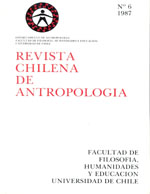
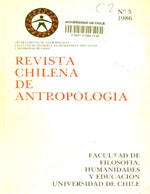
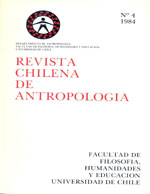
Open Access Journal: Revista Chilena de Antropología
Revista Chilena de Antropología
ISSN 0719-1472
ISSN 0719-1472

Revista Chilena de Antropología es una publicación del Departamento de Antropología de la Universidad de Chile. Es una revista internacional arbitrada por pares académicos que se publica dos veces al año (Julio y Diciembre) y que recibe manuscritos inéditos en español o inglés. Su objetivo es difundir y discutir la investigación en las diferentes ramas de la Antropología, con el fin de comprender los múltiples aspectos de las realidades sociales y culturales de Latinoamérica y el Caribe. Para ello, la revista recibe contribuciones durante todo el año y se estructura dos secciones diferentes: Artículos y Reseñas.
2009
2005
1999
1992
1991
1990
1988
1987
1986
1984
1980
1979
1978
No. 1 (1978)
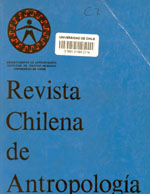
See the full List of Open Access Journals in Ancient Studies
New Ancient World Content in JSTOR
Multidisciplinary and Discipline-Specific Collections at JSTOR
The following is a list of JSTOR content updates. More detailed
information about titles and collections, along with delimited lists,
may be accessed from the Archive Collections page.
July 20, 2012 Release Content
Previously missing issues
Civilisations (Arts & Sciences IX)
http://www.jstor.org/action/showPublication?journalCode= civi
Coverage:
Vol. 1, No. 1 (1951) – Vol. 4, No. 4 (1954);
Vol. 11, No. 1 (1961) – Vol. 12, No. 4 (1962)
Moving Wall: 3 years
Publisher: Institut de Sociologie de l'Université de Bruxelles
ISSN: 0009-8140
July 27, 2012 Release Content
Previously missing issues
Rheinisches Museum für Philologie (Arts & Sciences XI)
http://www.jstor.org/action/showPublication?journalCode= rheimusephil
Coverage:
Neue Folge, 80. Bd., 3. H (1931) - Neue Folge, 83. Bd., 4. H. (1934)
Moving Wall: 3 years
Publisher: J.D. Sauerländers Verlag
ISSN: 0035-449X
Updates for zero moving walls titles
Getty Research Journal (Arts & Sciences V)
http://www.jstor.org/action/showPublication?journalCode= gettyresearchj
Coverage:
No. 4 (2012)
Moving Wall: Zero
Publisher: J. Paul Getty Trust
ISSN: 1944-8740
Links to External Content
Journal of Archaeological Method and Theory (Arts & Sciences VI)
http://www.jstor.org/action/showPublication?journalCode= jarchmeththeo
Links to External Content: Vol. 18, No. 4 (December, 2011) - Vol. 19, No. 1 (March, 2012)
Moving Wall: 3 years
Publisher: Springer
ISSN: 1072-5369
E-ISSN: 1573-7764
Journal of Archaeological Research (Arts & Sciences IX)
http://www.jstor.org/action/showPublication?journalCode= jarchrese
Links to External Content: Vol. 19, No. 4 (December, 2011) - Vol. 20, No. 2 (June, 2012)
Moving Wall: 3 years
Publisher: Springer
ISSN: 1059-0161
E-ISSN: 1573-7756
And see also
AWOL's full list of journals in JSTOR with substantial representation of the Ancient World
Archaeology and Landscape in the Altai Mountains of Mongolia
Archaeology and Landscape in the Altai Mountains of Mongolia

Support for this project was provided by the National Endowment for the Humanities, a federal agency. Any views, findings, conclusions or recommendations expressed in this website do not necessarily represent those of the National Endowment for the Humanities.
- An Inventory and Research Guide for understanding the Cultural Landscapes of the Altai Mountains of Mongolia
- A Resource dedicated to the investigation of ancient Altai cultures through
- A digital archive of monuments
- Interactive maps for analyzing the distribution of monument typologies
- Texts, images, and maps for understanding the region, its physical character, its cultural history, and the interrelationships of monuments and landscape
Thursday, July 26, 2012
Open Access Journal: Compte rendu de la Commission Impériale Archéologique
Compte rendu de la Commission Impériale Archéologique (St. Petersburg)
Die Digitalisate und die Metadaten dieser Zeitschrift werden von der Universitätsbibliothek Heidelberg im Rahmen des DFG-Projekts "Rezeption der Antike im semanstischen Netz: Buch, Bild und Objekt" bereitgestellt. Aktuelle Informationen finden Sie auf der Projekt-Homepage

See the full List of Open Access Journals in Ancient Studies
Subscribe to:
Posts (Atom)





 Posts
Posts


 Stumble It!

