by Donald Kagan
ISBN13: 9780801467288
Publication date: 02/15/2013
Pages: 1837
ISBN13: 9780801467288
Publication date: 02/15/2013
Pages: 1837
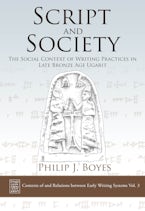
By the 13th century BC, the Syrian city of Ugarit hosted an extremely diverse range of writing practices. As well as two main scripts – alphabetic and logographic cuneiform - the site has also produced inscriptions in a wide range of scripts and languages, including Hurrian, Sumerian, Hittite, Egyptian hieroglyphs, Luwian hieroglyphs and Cypro-Minoan. This variety in script and language is accompanied by writing practices that blend influences from Mesopotamian, Anatolian and Levantine traditions together with what seem to be distinctive local innovations.
Script and Society: The Social Context of Writing Practices in Late Bronze Age Ugarit explores the social and cultural context of these complex writing traditions from the perspective of writing as a social practice. It combines archaeology, epigraphy, history and anthropology to present a highly interdisciplinary exploration of social questions relating to writing at the site, including matters of gender, ethnicity, status and other forms of identity, the relationship between writing and place, and the complex relationships between inscribed and uninscribed objects. This forms a case- study for a wider discussion of interdisciplinary approaches to the study of writing practices in the ancient world.
Series: Contexts of and Relations between Early Writing Systems (CREWS)Imprint: Oxbow Books
Sales Date: 2021-02-05
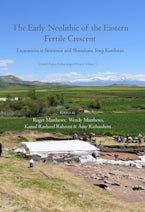
The Eastern Fertile Crescent region of western Iran and eastern Iraq hosted major developments in the transition from hunter-forager to farmer-herder lifestyles through the Early Neolithic period, 10,000-7000 BC. Within the scope of the Central Zagros Archaeological Project, excavations have been conducted since 2012 at two Early Neolithic sites in the Kurdistan region of Iraq: Bestansur and Shimshara. Bestansur represents an early stage in the transition to sedentary, farming life, where the inhabitants pursued a mixed strategy of hunting, foraging, herding and cultivating, maximising the new opportunities afforded by the warmer, wetter climate of the Early Holocene. They also constructed substantial buildings of mudbrick, including a major building with a minimum of 65 human individuals, mainly infants, buried under its floor in association with hundreds of beads. These human remains provide new insights into mortuary practices, demography, diet and disease during the early stages of sedentarisation. The material culture of Bestansur and Shimshara is rich in imported items such as obsidian, carnelian and sea-shells, indicating the extent to which Early Neolithic communities were networked across the Eastern Fertile Crescent and beyond. This volume includes final reports by a large-scale interdisciplinary team on all aspects of the results from excavations at Bestansur and Shimshara, through application of state-of-the-art scientific techniques, methods and analyses. The net result is to re-emphasise the enormous significance of the Eastern Fertile Crescent in one of the most important episodes in human history: the Neolithic transition.
GEPHYRA is both an open access online and a print journal compiled by the Research Centre for Mediterranean Languages and Cultures of Akdeniz University to publish contributions from all fields of research into Asia Minor and the Eastern Mediterranean, insofar as they shed new light on the history and culture of this geographical and historical region. Epigraphic, archaeological, numismatic and art historical contributions, commented and evaluated material presentations, as well as historical reflections and essays are all equally welcome.
The publisher of the print edition is Phoibos Verlag in Vienna.
Latest Issues
[First posted in AWOL 29 November 2015, 29 Novemebr 2025]
CEDRUS: Akdeniz Uygarlıkları Araştırma Dergisi
ISSN: 2147-8058
e-ISSN: 2148-1431
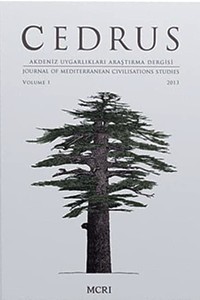
Akdeniz Uygarlıkları Araştırması Enstitüsü tarafından hazırlanan Cedrus, Türkiye tarihsel coğrafyası perspektifinde Akdeniz Havzası’nın kültür-tarih birikimini inceleyen Eskiçağ, Ortaçağ ve Yeni-Yakınçağ tarihi uzmanları için tartışma zemini bulacakları disiplinlerarası bir süreli yayın olmayı hedeflemektedir. CEDRUS, farklı disiplinlerden gelen bilim insanları arasında diyaloğun geliştirilmesi, var olan bilginin güncellenmesi ve yaygınlaştırılması süreçlerine katkı sağlayacak özgün ve bilimsel çalışmaları akademi dünyasının ilgisine sunmayı amaçlar. CEDRUS uluslararası hakemli bir dergi olup yılda bir kez yayımlanır.
The aim of the CEDRUS: The Journal of Mediterranean Civilisations Studies, an interdisciplinary publication, is to offer a forum for discussion to researchers focusing upon the Ancient, Medieval, Early Modern and Modern Periods and for the analysis of the cultural-historical background of the Mediterranean Basin within the extensive perspective of Turkey’s historical geography. CEDRUS aims to bring together original academic studies that can contribute to the process of developing shared perspectives and approaches between scholars from different disciplines and of revising and synthesizing the currently available knowledge for the attention of the academic world. Cedrus is a peer-reviewed journal published each year.
Latest Issues
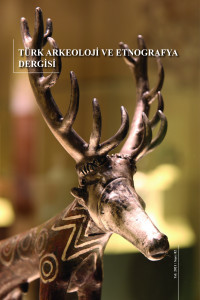
Türk Arkeoloji ve Etnografya Dergisi, 1933 yılında yayınlanan ilk sayısından itibaren farklı isimler altında ve bir dönem “Türk Arkeoloji Dergisi” ve “Türk Etnografya Dergisi” şeklinde iki farklı yayın olarak günümüze kadar varlığını devam ettirmiştir.Türkiye Cumhuriyeti dergicilik tarihinde özel bir yeri olan bir yayın olması nedeniyle 2021 yılında alınan bir kararla derginin aynı isim altında devam ettirilmesi ve zaman zaman kesintiye uğrayıp bir dönem de ayrı başlıklar altında yayınlasa da bir devamlılık gösterdiği kabulüyle, aynı sayı içerisindeki farklı ciltler de dahil edilerek o güne kadar çıkartılmış toplam 81 sayı bulunması nedeniyle yeni sayının 82’den başlatılmasına karar verildi. İçinde bulunduğumuz çağın akademik yayıncılık anlayışı gereğince “Hakemli Dergi” statüsünde ve yeni bir formatta devam ettirilen sayının uluslararası boyutta erişilebilirliğe kavuşturulması hedefiyle de dergide yayınlanan tüm makalelerin İngilizce çevirilerine dergi web sitesinde yer verilmesi kabul edildi.Bu nedenle dergimizin 1933 yılından itibaren çıkmış olan tüm sayılarına “E-Dergi” sekmesinden ulaşılabilir. Web sitemizin İngilizce versiyonunda ise derginin yeni formatıyla yayınlanmaya başlandığı 82. sayısından itibaren tüm makalelerin çevirilerini bulabilirsiniz.
Latest Issues
Research Article
See AWOL's full List of Open Access Journals in Ancient Studies




 Posts
All Comments
Posts
All Comments





 Stumble It!