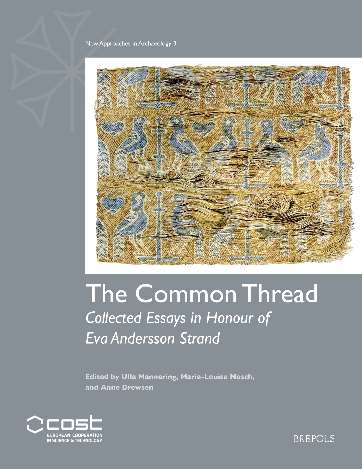
The Ancient Egyptians used it for both the living and the dead, the Greeks and Romans used it to signal their status, and it aided the Vikings in reaching the far shores of Europe and Eurasia. Textiles have surrounded us, literally and figuratively for millennia, but this common thread has long been ignored in scholarly research. With the inception of the Centre for Textile Research at the University of Copenhagen in 2005, however, this approach changed fundamentally, and today, every type of research discipline comes together to begin unravelling the stories told by textiles. How do we understand textiles and how do we talk about them? Who produced textiles, where, and for what purposes? How do we conduct research into the origins of materials? How did cultivating flax or raising sheep change the ancient landscape? How have we researched textiles so far? What can we learn from textiles about society, gender, and production? This volume engages with these questions and explores how the fabric of society has changed through researching textiles in all its facets, from archaeology and history to natural sciences. Taking as its starting point the research interests and career of its honorand, Eva Andersson Strand, this meticulously researched volume consists of three parts, covering the tools and techniques that form the basis of all research explores; how craftspeople made use of tools and techniques; and how textiles have been used over millennia to signify identity and status.
© 2024 Brepols Publishers n.v.Textiles and Tools
oa Ragpickers. Critiquing the Third Science Revolution with Walter Benjamin
oa Textile Analysis in Europe. Current Practices and Future Prognosis
oa From Fleece to Thread. Interdisciplinary Evidence for the Origins of Sheep Wool
oa An Arctic Thread
oa The Beginnings of Clothing Experiments in Near Eastern Archaeology
oa Fløjstrup — A Viking Age Grave with Early Silk
oa The Importance of Understanding Textile Tools
oa Making Visible the Invisible. The Case Study of Clay Sealings from Arslantepe (Turkey)
Craft and Craft Traditions
oa Textile Workshops in the Nile Valley? Questioning the Concepts and Sources
oa Sprang Hairnets from Prehistoric Denmark and Byzantine Egypt. Experimental Research
oa Spinning Fates and the Fate of Spinning. Towards a Nordic Textile Technical Terminology
oa Teaching and Disseminating Textile Archaeology in University and Museum Contexts
oa Weaving Pictures. Evoking a World from Threads
oa Beyond Traditions. Rethinking Textile Crafts and Heritage
Identity and Status
oa Stitch and Status. An Analysis of the Expression of Worldviews through Knitted Garments
oa The Combat Agate and the Tartan-Like Textiles of the Aegean
oa Textiles in Etruscan Dance. The Case of the Tomba del Triclinio in Tarquinia
oa Reading the Roman Toga from Sculpture
oa Two Donkey Burials
oa Embellished Clothing in the Mesolithic Based on Finds from two Cemeteries in Sweden
oa Sequins and Other ‘Bling’ in Viking Age Fashion
oa One Silk Textile — Multiple Histories and Her-Stories
oa Front Matter (“Table of Contents”, “List of Illustrations”, “Preface”)
oa In the Beginning…
No comments:
Post a Comment