Chapitre Ier
Le roi HérodeChapitre II
Hérode le tueur d’enfantsChapitre III
Hérode le demi-juifChapitre IV
Hérode le roi infâmeChapitre V
Hérode le roi helléniséChapitre VI
Hérode le roi qui fit fleurir le désertConclusion
Rendre le roi Hérode à l’histoire
Friday, September 30, 2022
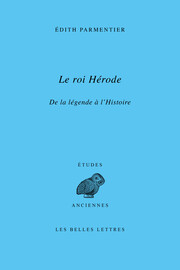
Le roi Hérode: De la légende à l'Histoire
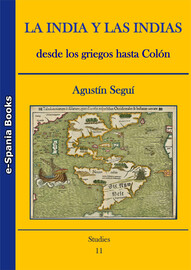
La India y las Indias desde los griegos hasta Colón
Christophe Colomb appela Indes, au pluriel, les territoires qu'il découvrit, absurdité critiquée en Espagne dès le début. Mais ce n'est pas la seule utilisation étrange du toponyme. Pour les étudier, ce livre part du nom sanskrit original (parvenu au grec par l'intermédiaire du perse) et de la connaissance de l'Inde en Grèce (encore nulle chez Homère, supposée plus tard être la fin du monde). La connaissance ultérieure de l'Asie du Sud-Est conduisit à parler de plus d'une Inde (deux chez Ptolémée, trois chez les Arabes médiévaux et jusqu'à quatre au Moyen Âge européen, voire cinq ou plus en l'Inde propre et les pays d'Extrême-Orient), mais sans pratiquement utiliser le pluriel. C'est Colomb qui pluralisa sans mesure, même si son objectif était une Inde entièrement chinoise. Le livre se termine par un traitement détaillé et inédit des problèmes linguistiques du pluriel colombien.
- Éditeur : e-Spania Books
- Collection : Studies | 11
- Lieu d’édition : Paris
- Année d’édition : 2022
- Publication sur OpenEdition Books : 28 septembre 2022
- EAN électronique : 9782919448456
Thursday, September 29, 2022
Klêros: A database of literary and epigraphic evidence for the drawing of lots in Archaic and Classical Greece
The study of drawing lots in the ancient Greek world relates to the practices of drawing lots, their contexts, and the egalitarian mindset that both enabled and expressed them. Long before lots became a political instrument in the Athenian democracy, Greeks were drawing lots for distribution, selection, determining turns and procedure, initiating social and political mixture, and divination. Greeks participated in lotteries on an equal basis, defining the contours of the community in the process, and emphasizing the values of equality and fairness.
The birth of democracy in ancient Greece cannot be fully understood without researching the wide spectrum of drawing lot with their emphasis on individual, equal or equitable “portions,” and the interchangeability (hence equality) of participants. The centuries between Homer and Cleisthenes (roughly 750-500 BCE) have never been studied comprehensively with the question of drawing lots in mind. Drawing lots expressed a horizontal, egalitarian “vector” of society that was often at odds with the elitist one.
Aramaic Daniel: A Textual Reconstruction of Chapters 1–7
The first half of the book of Daniel contains world-famous stories like the Writing on the Wall. These stories have mostly been transmitted in Aramaic, not Hebrew, as has the influential apocalypse of Daniel 7. This Aramaic corpus shows clear signs of multiple authorship. Which different textual layers can we tease apart, and what do they tell us about the changing function of the Danielic material during the Second Temple Period? This monograph compares the Masoretic Text of Daniel to ancient manuscripts and translations preserving textual variants. By highlighting tensions in the reconstructed archetype underlying all these texts, it then probes the tales’ prehistory even further, showing how Daniel underwent many transformations to yield the book we know today.
- Copyright Year:
- 2022
E-Book (PDF)
- Availability:
- Published
- ISBN:
- 978-90-04-52130-8
- Publication date:
- 19 Sep 2022
Hardback
- Availability:
- Published
- ISBN:
- 978-90-04-52129-2
- Publication date:
- 22 Sep 2022
Front Matter
Open Access Open AccessAuthor: Open AccessAuthor: Open AccessAuthor:
Open AccessAuthor: Open Access Open Access Open Access Open AccessAuthor:
- Pages:
- 44–55
Open Access Open Access Open Access Open Access Open Access Back Matter
Open Access Open AccessAuthor: Open Access